
War leaves nothing untouched. Nestled on the legendary Dnieper River at over 4 miles from the main highway in central Ukraine, Director of the Hlyboki Balyky Ecological Research Station (commonly referred to as Ecostation) Bogdan Popov found himself turning the station into a short-term shelter for refugees of Russia’s full-scale invasion. Newly founded in 2019 with expansive work residences and hostels, since 2022 the Ecostation has offered transitional refuge to those escaping the brutality of the war.
But even after Ukrainian Defenders recaptured the Kyiv and the frontlines shifted away from central Ukraine, the Ecostation has remained critical to the future of the country and to the wider ecological community.
Hlyboki Balyky is but one Ecostation in a wider network, but it is a central hub of ecological and biodiversity research in the country.
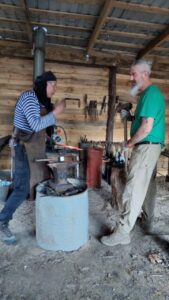
A permaculturist by trade, a student of ecology, and a blacksmith at heart, Bogdan Popov spends his days forging ancient and practical tools alike, managing acres of land using holistic methods, and teaching the youth about biodiversity and the outdoors.
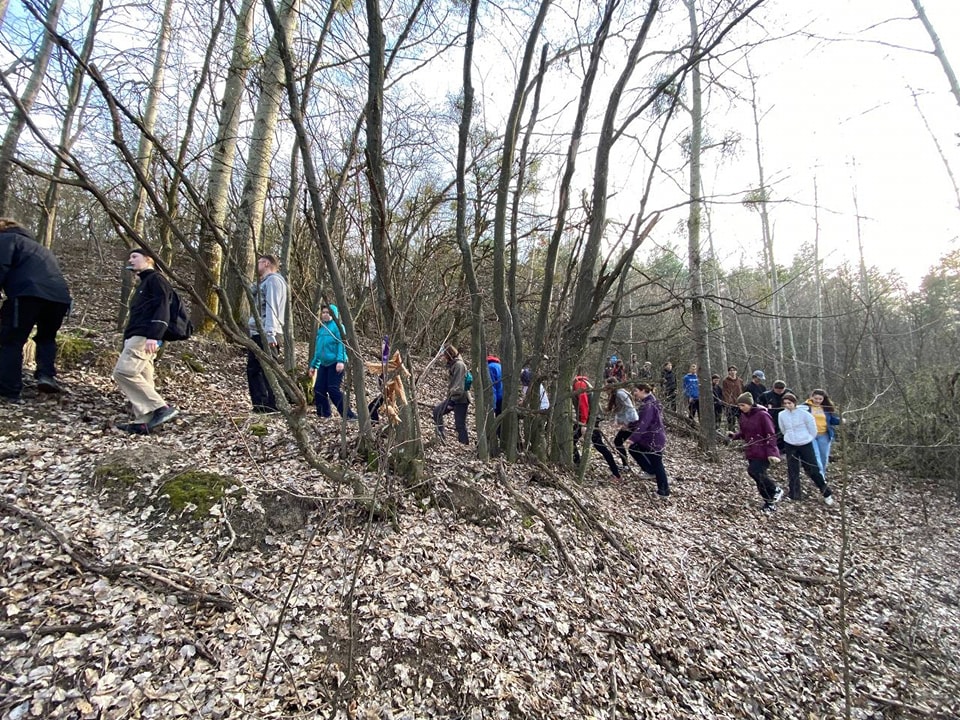
With decades of experience under his belt across multiple disciplines, Bogdan envisions an Ecostation that transcends national interests while supporting Ukrainian sovereignty by providing leadership and education exploring practical means for protecting and enhancing Ukraine’s valuable natural capital, such as the fertile agricultural soils that have made it a bread basket of the world.
We learned of the Ecostation network through the Savory Institute and Bogdan’s regenerative agriculture initiatives. Holistic Management—what we believe plays a part in disaster prevention—is a key to reclaiming the land from the impacts of the Russian invasion, decades of extractive Soviet policies, and securing a healthier world.
The lingering effects of the Soviet Era
The Ukrainian landscape still bears scars from Soviet Era occupation. Not far from the Ecostation is what appears to be deep gullies, where there once was fertile farmland.
In a poorly planned attempt to stop land erosion near a creekbed, the Soviet leadership planted trees. This forest belt approach, however, was ineffective. Poor funding and a lack of understanding of Ukraine’s regional biomes weakened the plan. They created, in effect, a forest with an erosion problem.
Along the Dnieper River, the Soviet Union developed man-made seas, over-investing in large-scale hydroelectric dams. that are both uneconomical and damaging to the local environment. The installation of these dams changed coastlines, disrupted flood plains and fertility cycles, and swallowed agricultural land. Soviet leadership finalized these plans as part of a disastrous industrialization attempt, and the losses from flooding Ukraine’s rich, black soil were nearly 400 times higher than the profit from these initiatives.
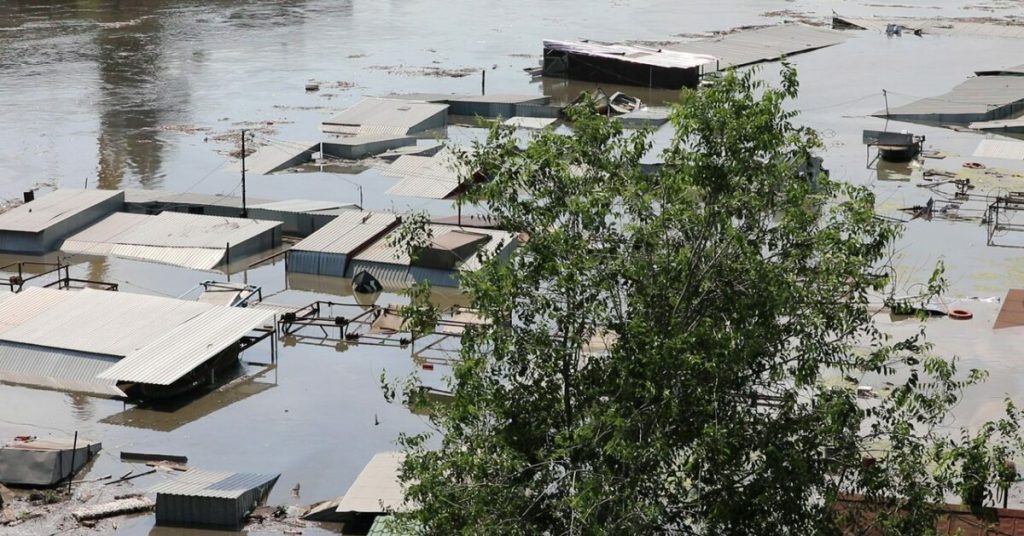
The effects of the war on Ukrainian agricultural land and resources
One of those dams, Kakhovka dam, was destroyed by Russia in 2023 as part of a failed counter-offensive, destroyed 80 villages, killed more than a 100 people, and destroyed over 40 nature reserves—on top of flooding the Black Sea with chemicals. The destruction of the dam also jeopardized the safety of the Zaporizhzhia Nuclear Power Plant and threatened a nuclear catastrophe until the plant’s cooling water supply was confirmed to have stabilized.
Today, while the Hlyboki Balyky Ecostation remains far from the fighting, Eastern Ukraine will face its own land recovery crisis. Dangerous chemicals and metals, from lead to white phosphorus, have pummeled the landscape and leached into the soil and water. A minimum of 300 acres suffer from soil pollution and 66,802 tons of pollutants have been released into sea water. Around 1,161,395.29 acres of farmland have been damaged and potentially contaminated.
The task ahead for Ukrainian researchers and ecologists to revive the land after war is monumental and costly. According to Ukraine’s Office of Environmental Protection and Natural Resources, environmental damage since the war began amounts to nearly $90 billion in estimated remediation expenses.
The Ecostation helps with this remediation effort by collecting research samples and data with the help of local and international ecologists. The Ecostation also provides leadership in rebuilding the land west of Dnieper and encouraging biodiversity to return. Seed nurseries, supplied by the Ecostation, can also help bring back native plants once the soil is recovered.
Connecting the land, its people, and the global community
Investment in the restoration of devastated land links the war-torn present to a peaceful future that can transcend Soviet-era disasters that Ukraine inherited. By continuing to educate youth, support farmers, and offer a space for future research, the Ecostation Network as a whole offers the global community a vision of better times ahead and the technical means of achieving it.
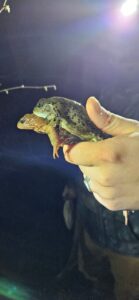
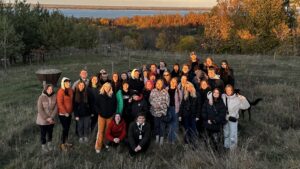
Socially, centers like Hlyboki Balyky provide a number of benefits beyond long-term environmental recovery to both Ukrainians and international volunteers and professionals. The site offers effective therapeutic benefits for Ukrainian veterans and civilians with PTSD that deserve further support and expansion. From hiking to working the land to traditional crafts like weaving and blacksmithing, those most affected by the war can see the Ecostation as a place of refuge and trauma recovery, displacing despair with hope.
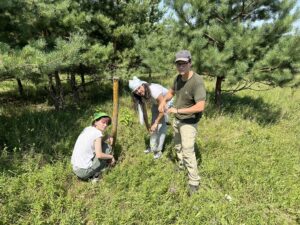
At its core, the Ecostation Network represents the future of ecological research and the preservation and restoration of Ukrainian biodiversity. It is a model of deep sustainability, and as a crucial center of learning, it can provide insights into how to navigate our changing climate that can serve and inform the global community’s struggle with climate change.
All of this is made possible through the Ecostation’s revenue streams, which include donations, selling biochar, and optimizing yields through regenerative agriculture. The Ecostation provides a leading model for local farmers, teaching the next generation tried and true frameworks for effective regenerative land stewardship. A combination of biochar and hay sales provide the bulk of income for this nonprofit.
It is this holistic initiative that provides the Ecostation with revenue to support its educational and other social programs that are key to healing both land and people and securing Ukrainian sovereignty and freedom into the future.
Rebuilding Ukraine’s biodiversity starts with regenerative agriculture
We know that responding to disasters is not enough. We look at high-impact solutions, where disaster prevention is the key to reducing loss of life and property, and making it easier to help others. That is why we have partnered with Bogdan at Hlyboki Balyky to bolster their operations.
There are two components to our work with the Ecostation:
First, we are helping the Ecostation team get a compact baler. Rather than renting a baler and additional labor, purchasing it will increase and gross revenue by 200%. Hay is sold locally to small farmers to support their livestock throughout the year. Funds from these sales go directly to supporting key biodiversity and social programs at the Ecostation.
Our work here ties in with Pathfinder XGI’s larger food security program in Ukraine: Project Henrietta. Second, we will provide the Ecostation with hens and a coop to support regenerative initiatives and source hens for our program. We send egg-layers and broilers to rural and food insecure households in the East and smoked chickens to volunteers to the frontlines. Offering hens and livestock rather than supplying straight food items offers recipients a replenishing source of protein, for long-term food security.
Join us on the journey
Our work with Bogdan and the rest of his team at Hlyboki Balyky and the larger Ecostation Network will help Ukraine during and after the war through promoting livelihoods, environmental education, better land stewardship, and food security. The research accomplished from the vast knowledge in the Ecostation Network will benefit the global community.
And you can be a part of it.
Jump onboard today by volunteering or giving a gift below.